Does your intranet have low adoption? Have the number of users regularly visiting started to dwindle over the years? Don't worry, you're not alone. Good adoption is never guaranteed, and low intranet adoption is a common problem, remaining a perennial thorny issue for intranet teams.
Strong intranet adoption is important and helps generate value for the intranet. There's not much point in an intranet that nobody uses. However, the good news is that there are usually several common reasons why an intranet suffers from low adoption, each of which can be dealt with in order to encourage more employees to visit the intranet.
In this article we cover eight common reasons nobody seems to be using your intranet and the "remedy" you can follow to reverse the trend in each case.
Why do employees avoid the intranet?
1. Employees no longer trust your intranet content

An intranet is only ever as valuable as its content, so when content is irrelevant, out of date or duplicated, then the intranet depreciates in value. And the more erroneous, outdated, and conflicting versions of items that employees find, the more their overall trust in the intranet and its content will erode. This usually plays out in the following way:
- Employees start to doubt the good content that is actually there
- They no longer automatically go to the intranet as the "one source of truth"
- Adoption gradually declines over time.
Remedy:
- Content governance is the only sustainable fix: clear ownership for every area, review cycles that prompt owners rather than relying on memory, and a process for retiring content rather than leaving it.
- Publishing that depends on IT is a common hidden cause - content ages while it sits in a queue belonging to people who cannot judge whether it is still correct.
- We have set out how to approach this in ten ways to improve SharePoint intranet adoption, and the governance mechanics in 12 SharePoint best practices.
2. The intranet does not help employees get things done

Intranets generate value in many different areas, including:
- Supporting productivity, by helping employees find what they need to support their work.
- Reducing risk and supporting compliance through standardisation and transparency.
- Keeping employees informed through internal communications.
- Driving engagement by fostering a sense of connections and community.
- And more!
All of these areas matter. However, when it comes to using an intranet, the main reason an employee will visit is to get things done and complete tasks in their busy working week. This is the essential "what's-in-it-for-me" factor that underpins adoption for the majority of employees. If an intranet is solely focused on communications and engagement rather than supporting day-to-day work, then adoption can suffer.
Remedy:
- Ensure the intranet helps employees get things done and is useful for everyday work - this is the single most reliable predictor of whether an intranet gets used.
- Internal comms matters, but balance it with how-to information, links to tools and the ability to complete simple transactions. Get this right and news readership rises as a side effect.
- The five things an intranet is actually for are set out in what is an intranet, and the practical version is tactic one in ten ways to improve SharePoint intranet adoption.
3. The intranet has a poor user experience

Employees generally have positive experiences of technology outside work through the apps, websites, and social media channels they use every day as consumers. So, when the technology they use inside work fails to meet these standards or their expectations it is a problem.
A poor user experience leads to reduced adoption. Nobody wants an intranet that looks dated, is horribly clunky, or confusing and difficult to use. And they definitely do not want an intranet that has technical issues, for example with slow load page times or regular unplanned outages. Ultimately if the intranet experience is frustrating for users, then they will not use it.
Remedy:
- Ensure your intranet has a good user experience by investing in an engaging design, ongoing user testing, and continuous improvement.
- Keep on monitoring performance too, a factor in adoption that sometimes gets missed.
- A surprising amount can be achieved by configuring SharePoint well before anything is bought. Our SharePoint intranet designs page shows what is achievable, and there are 12 real SharePoint intranet examples with commentary from our UX team.
4. The intranet hasn't evolved over the years

Employee needs and expectations are in a constant state of change and flux - and intranets must constantly evolve to meet these needs to maintain adoption and value. Restructures. New acquisitions. New technology advances (hello AI). New products and services. New ways of working. New compliance needs. New tech experiences in the consumer world. All of these may trigger changes or additions to an intranet's structure, content and features. An intranet that stands still and doesn't evolve accordingly will effectively decline and lose adoption as the world moves on.
Remedy:
- Ensure there is a robust basis for continual improvement for your intranet, so it keeps evolving, adding new content and features on a regular basis.
- Use a mixture of analytics, user feedback, and stakeholder input to keep on top of employee and organisational needs.
- What "evolving" means changes year to year. We have set out where intranets are heading in eight SharePoint intranet trends for 2026, and how quickly the platform itself is moving in six realistic use-cases for AI on your intranet.
5. It is impossible to find anything

A core role of a successful intranet is to help people find the information they need to carry out their role; if it is impossible to find anything on your intranet, then it will inevitably stop getting used. Poor findability is more often a content issue than one with technology:
- It might be that you have too much out-of-date content which means a lot of "noise" clogs up your search results.
- Content may be spread across different repositories beyond your intranet and is not covered by the intranet search.
- A poor intranet navigation will also contribute to poor findability.
Remedy:
- There is usually no single magic ingredient or one tactic that will cure search and ensure people can find what they need, so realistically you will need to introduce a range of tactics.
- Work on a programme of continual improvement for search and findability that spans across multiple areas including removing out-of-date content and tightening up content governance to make things findable.
- Consider the search experience itself - scoped search on high-traffic pages, and AI search where content quality supports it. We have covered where AI genuinely helps in six realistic use-cases for AI on your intranet.
6. The intranet is not easily accessible from the places people work
Is your intranet easy to access from the systems, applications, and devices where employees spend most of their working day? If the intranet is an extra inconvenient step away to access from the flow of work, this can have a surprisingly significant impact on levels of adoption. For example:
- Many people work in Microsoft Teams all day and it is the centre of their digital employee experience, but the intranet might not be easily accessible from there.
- Frontline employees may well only have access to a mobile device during the working day, but the intranet cannot be viewed from their mobile device.
- If you are using Microsoft 365 and you don't use a SharePoint intranet, then people may even have to use additional credentials to log into the intranet.
All of these three examples will negatively impact adoption.
Remedy:
- Remove barriers to usage by ensuring the intranet is integrated with the other tools across your Microsoft 365 digital workplace. Microsoft 365 intranet options sets out what each route means here.
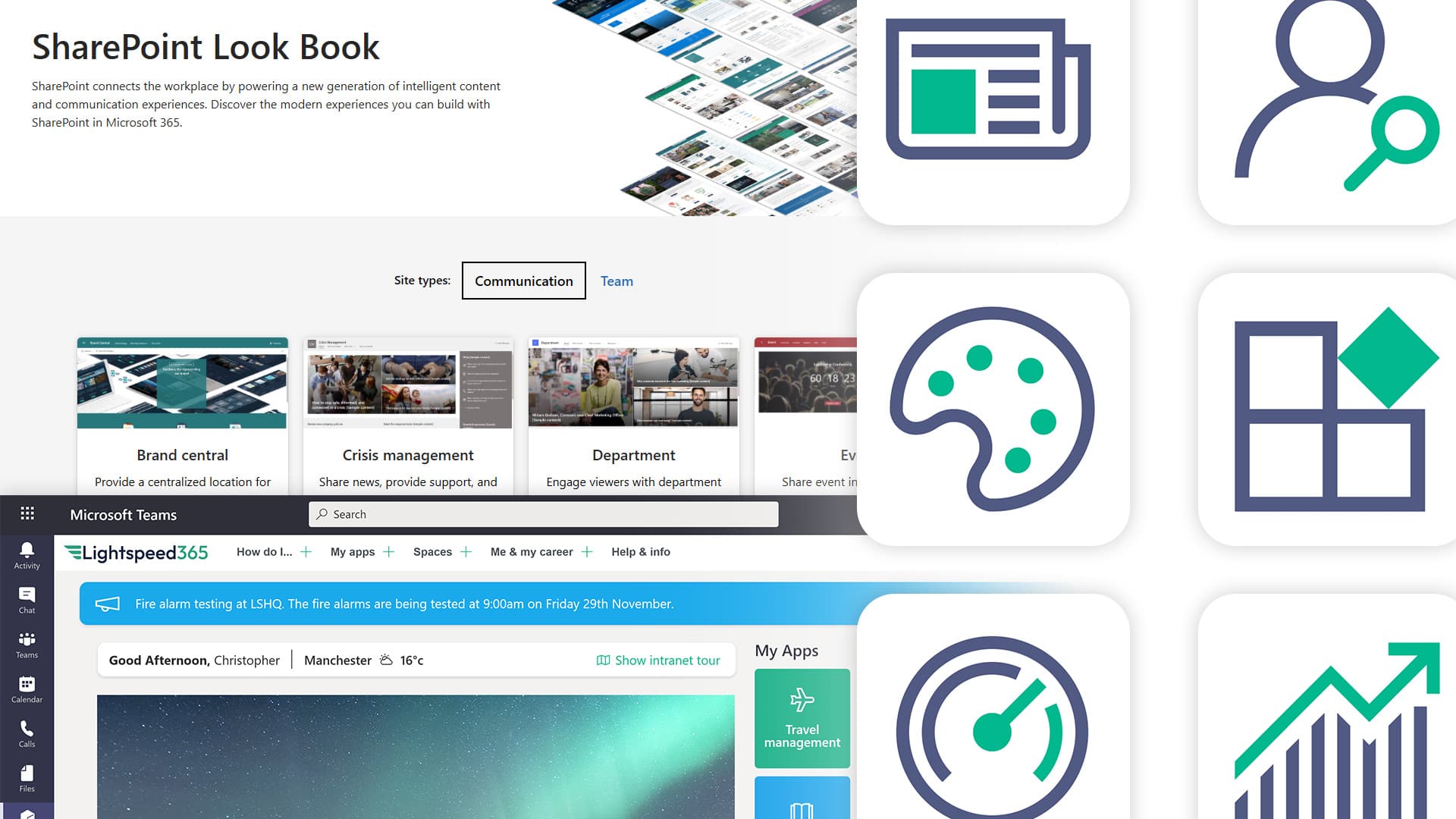
- Make the intranet accessible from Microsoft Teams, usually through Viva Connections, or through a product with a native Teams app such as Lightspeed365.
- Ensure it can be accessed from mobile devices, which matters most for frontline and shift-based staff who may have no other route in.
7. The intranet is not personalised, so it is less relevant to employees

Personalisation on your intranet can massively improve engagement.
Organisations have incredibly diverse workforces with different needs and requirements. Consider a global or complex organisation with employees across different countries, locations, divisions, roles, brands, levels of hierarchy and years of tenure. Every individual has different professional interests and personal preferences.
When an intranet takes a one-size-fits-all approach it means that the content and experiences it delivers will be irrelevant or of no interest to sections of your workforce. People in the Paris office don't want to hear about the news for the London office. Ultimately, if the intranet is not relevant then employees will not engage with it and adoption will dwindle.
Remedy:
- Modern intranets use personalisation and targeting based on user profile data in order to ensure relevance and underpin adoption.
- Ensure you are using personalisation on your intranet - even a gentle sprinkle can make a significant difference.
- Let people subscribe to the content types they care about rather than relying on targeting alone - self-selection is often more accurate than anything inferred from a profile.
- Note that accurate and complete profile data - usually from Entra ID - is a prerequisite for success here.
8. Adoption is low and it's going into a 'death spiral'

In this article we've described a variety of factors that drive low adoption. Unfortunately, when adoption does start to decline, this in itself leads to a further fall in the numbers of people using the intranet. There may be a growing perception that nobody uses the intranet now, so it is not worth visiting there or adding content to it. Stakeholders may feel it is pointless to make improvements to their sites or pages within it. Alternatives such as SharePoint sites or other solutions spring up, further eroding adoption and confidence.
Remedy:
- It is never too late, but the cost of recovery rises the longer it is left - this is far cheaper to address at the point you notice it than eighteen months later.
- Work through the remedies above and commit to continual improvement rather than a single push. The full programme is set out in ten ways to improve SharePoint intranet adoption.
- A relaunch or rebrand can reset perceptions, but only once the underlying causes are fixed. Relaunching the same intranet with a new logo makes the next attempt harder. Our case studies show what this looked like for organisations that did it properly.
How Lightspeed365 supports SharePoint intranet adoption
There is no single key to increasing intranet adoption, but a product like Lightspeed365 can help with several of the causes above:
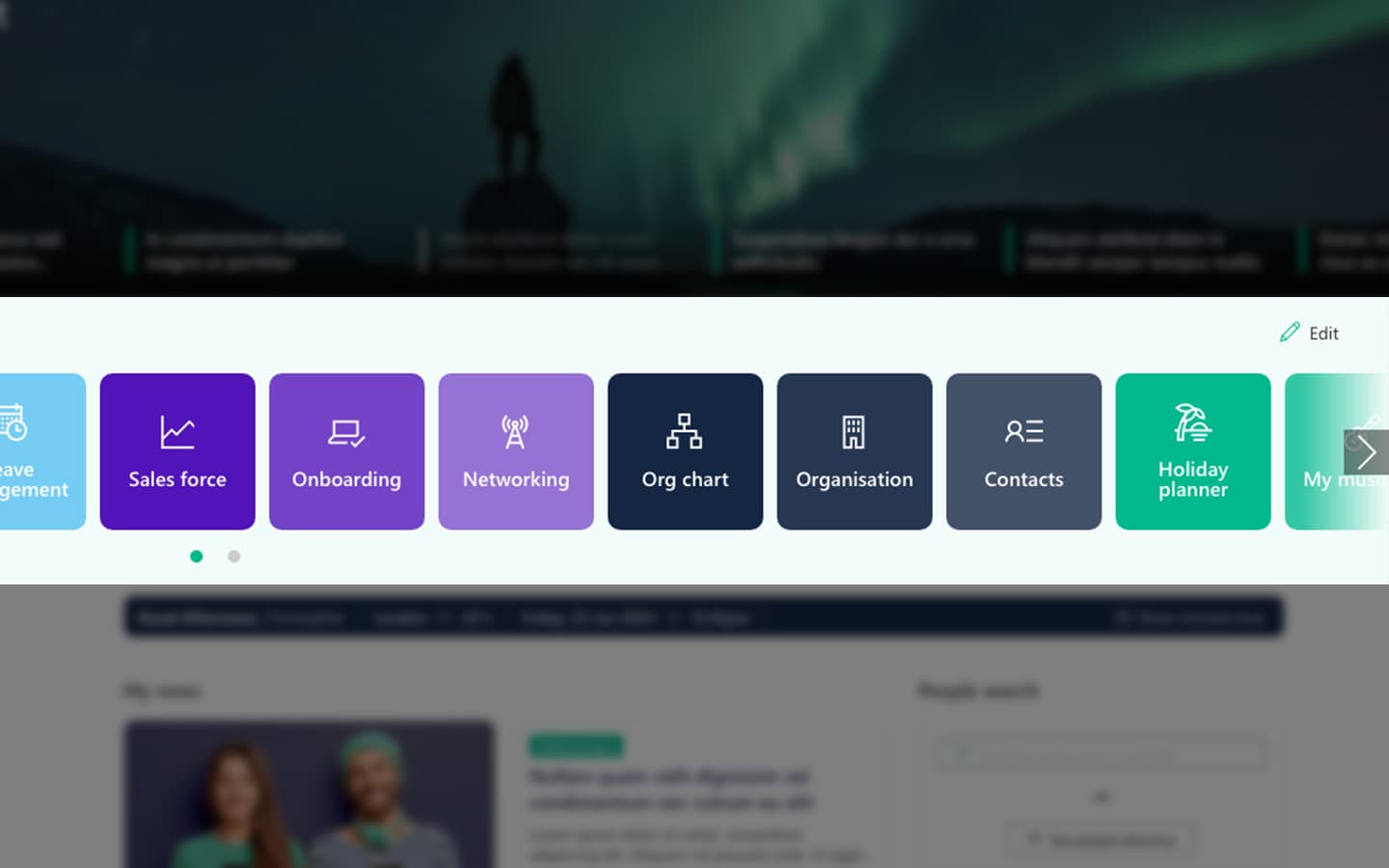
- Extending SharePoint so the intranet becomes the place people complete tasks - the app launcher is usually the feature that does most of this work.
- Additional design and branding options, so the intranet stops looking like default SharePoint.
- A native Teams app, so the intranet sits where people already are rather than a click away.
- Personalisation and news subscriptions, so what each person sees is relevant to them.
Need help with SharePoint intranet adoption?
If several of these sound familiar, the difficulty is usually knowing which to tackle first. Our intranet health check takes about ten minutes and gives you a score across communications, self-service, engagement and governance, which is a reasonable way to narrow it down.
If you would rather talk it through, book a demo and we will walk you through what a well-adopted intranet looks like.
Frequently asked questions
About the author

John Scott
UX director
John is Head of UX at Content Formula, shaping the experience behind Lightspeed365. He writes about SharePoint intranets, UX, and digital workplace design, grounded in real-world delivery.